After just recently finishing reading "This Is Your Brain On Music" by Daniel J. Levitin, I've constantly been fascinated throughout my days by the notion of music, and more generally, sound, irreversibly surrounding us and filling the air in all the spaces we navigate through, and enacting huge impacts on our survival as a species, and our understanding of the places around us. The sound in the air triggers innumerable neurochemical reactions in the brain, on multiple levels, in a dynamic fashion. Music excites our brains electrically. Music makes our brains flutter with connections and transmissions of energy and information.
And then there's THIS article by the BBC that is about sound/music having the very real and dangerous potential to cause your lungs to collapse. Wow:
"It is thought that the intense pulses of low-frequency, high-energy sound causes the lung to rupture because air and tissue respond differently to sound."
Apparently a 23 year old non-smoking man had one of his lungs collapse on him while he was just "standing quietly near to several large loud speakers” at a pop concert.
Now the concept of sound/music permeating the air surrounding us in every space is even more serious when music has the ability to literally take your breath away.
you are truly breathing music, and drowning in music, and receiving music through your skin and your chest and your bones.
Friday, July 16, 2010

Monday, June 28, 2010
this is definitely the word
Jungftak: A Persian bird, the male of which had only one wing on the right side, and the female only one wing on the left side; instead of the missing wings, the male had a hook of bone, and the female an eyelit of bone, and it was by uniting hook and eye that they were enabled to fly. Each, when alone, had to remain on the ground. (Webster's unabridged dictionary 1943)
Apparently, map and dictionary publishers sometimes include fictional entries as a preemptive strike against competitors who might copy and publish stolen content as their own. A sort of watermark of fabricated information and meanings.
Think about it, for would be copyright infringers these fictional entries are: landmines of the imaginary.
Also: what if the fictional entry enters into usage? Then it no longer becomes fictional...
In dictionaries and encyclopedias these fictional entries are called "mountweazels." On maps they are called "trap streets" and "paper towns."
I found out about "jungftak" because this dude called up a linguistics podcast called "A Way With Words" and confessed that he had been haunted by this one word for DECADES. That is what I'm talking about.
Apparently, map and dictionary publishers sometimes include fictional entries as a preemptive strike against competitors who might copy and publish stolen content as their own. A sort of watermark of fabricated information and meanings.
Think about it, for would be copyright infringers these fictional entries are: landmines of the imaginary.
Also: what if the fictional entry enters into usage? Then it no longer becomes fictional...
In dictionaries and encyclopedias these fictional entries are called "mountweazels." On maps they are called "trap streets" and "paper towns."
I found out about "jungftak" because this dude called up a linguistics podcast called "A Way With Words" and confessed that he had been haunted by this one word for DECADES. That is what I'm talking about.
Friday, June 11, 2010
You can laugh with me if you wanna do
Holy shit. Over the course of nearly two and half years I bacame under the impression that Korean pop music videos are largely a let down for me. Until now.
Tuesday, May 25, 2010
happy to be consumed
A lot of Korean restuarants have signs above their doors displaying happy cartoon versions of the animal that they specialize in serving. Happy cows, happy squids, happy chickens wrestling with happy ginseng roots. It goes beyond animals even. We were driving through this town that is famous for red bean dumplings and the town mascot was a large cartoon statue of a red bean dumpling who was holding a platter with a big smile that was piled high with smaller red bean dumplings. The thing that eats the thing that eats itself and serves itself to be eaten. Perhaps this is to send out a message that the animal (or food object) is happy when it's alive and even happier when it's cooked and chewed and devoured by humans. I saw what I take to be a direct effect of this form of advertising on one of my kindergarten students just a few minutes ago. We were learning about the letter O, and in the coloring and tracing worksheet I gave them, there was a happy cartoon octopus wearing a baseball cap and juggling some oranges for them to color. He colored it all in red and then I heard him say in Korean that it's red because it's a spicy thing to eat, as if it was covered in chili paste. And I realized that not even silly looking cartoon animals are safe from the Korean child's appetite. Nor I guess should they be. Once when I showed a slideshow of cartoon animals I noticed that while looking at every new slide and repeating the English name I said, this one tiny girl in the class would say the animal's name followed by either "gogi" or "guee". Gogi means meat and guee means a form of preparing and cooking the meat in a marinate.
Tuesday, May 11, 2010
not seeing Korean weddings
The science research school office worker girl invited me to her wedding last Saturday. I'd heard horrific things about Korean weddings, so I was half excited and half dreading going to it.
It was held at the Sun Town wedding hall in town. It already looked like a madhouse while Lindsey and I were walking up. Luckily I had called Elvis to get some pointers on how to deal with the wedding gift and everything and he ended up waiting in the parking lot for us amidst the crowds. Koreans don't do wedding gifts usually, just cash. 30 thousand won minimum. Although I've heard with the new 50 thousand won bills in circulation, the minimum is soon to raise. Apparently the cash makes the wedding double as a bit of a fundraising event, depending on the wealth of the couple tying the knot I suppose. The cash helps pay for the cost of having the wedding. This idea of fundraising was pretty much the only part of the event I liked. I think big weddings are a total waste of resources for families that aren't wealthy already, and cash seems to be just as impersonal as choosing something off a wedding gift registry at Bed Bath and Beyond, but seems more useful to the couple getting married. And it definitely helps better to counteract the exorbitant cost of having one's sacred union in love made into a massive public spectacle.
Once Elvis led the way for us through the shoving crowds and up the stairs we put our 30 thousand won into an envelope which the wedding hall provides, had Elvis mark it with the appropriate information (since there's multiple weddings going on simultaneously), and gave it to one of the people manning the cash donation desks. Upon giving the money, we each got a ticket for the buffet.
People's attire ran the gamut from formal wear similar to what you would see at weddings in the States to traditional Korean hanboks to just a hoodie, sneakers and jeans. It seemed like none of the children were dressed up for the occasion. I also liked that part of the wedding.
There were at least three weddings going on simultaneously that day, maybe more, but the mass of people and lack of time made if difficult to tell. I can only imagine what train wrecks transpire in those 5 storey monster wedding halls I've seen in Seoul. And all the people from all the weddings were eating off the same food at the buffet. All things considered the food wasn't that bad, and they had cold king crab legs.
After about 25 minutes or so of sitting awkwardly at the table that my elementary school staff had occupied and not really talking to anyone but Lindsey, I asked her what she thought the bride and groom were doing during the buffet, since it was going on before the wedding and it seemed like it was taking the place of the wedding reception, since there wasn't going to be any social event after the ceremony.
Finally, Elvis got my attention and asked if we wanted to go view the ceremony. All the teachers left at the table and Lindsey and I got up and followed him up the stairs to the room where the ceremony was happening and I saw the bride standing on the platform with her husband and around 20 other people, posing for a group photo. Elvis said something in Korean to some of the school staff, they all nodded, then he turned to me and told me, with his usual slight half-embarrassed grin, that the ceremony was finished.
Apparently Lindsey and I, along with the entire school staff attending had missed the ceremony because we were eating too long at the buffet. And they didn't seem concerned about it in the least. At least I had an answer to my question about where the bride and groom were while everyone was eating: they were getting married.
Judging from what time it was at that point, the entire ceremony had lasted less than 15 minutes. And they were taking group photos of different combinations of family and friends for around 20 or 30 minutes. They even staged the throwing of the wedding bouquet by choosing which woman was going to catch it, so they could capture the perfect "looking" moment for the photo album to be filled with other documentations of fabricated moments that had never been truly lived, from an event that had hardly even taken place, past the appearance of it. Everyone spilled outside, past the display of a long row of identical rental bridal gowns, and into the parking lot, and then we all dispersed and went home, all in just under an hour. I remember feeling like I'd been spit out of a tube of some sort, not even really sure what kind of event I'd witnessed (or not witnessed, for that matter). I asked where they were going for their honeymoon and only one person present seemed to know that they were going to Jeju Island. A teacher asked why they weren't going abroad, and another teacher gestured a hand across her belly and said it was because the bride was so pregnant.
It dawned on me that many Koreans are satisfied with having the "appearance" of having a wedding ceremony and having the images of having a wedding ceremony, and seemingly unconcerned with the emotional value and actual quality of the content of the ceremony itself that they actually have. Although, I'm assuming this only applies to the majority of Western style weddings in Korea, which unfortunately is the norm. I've never attended a traditional Korean wedding ceremony, but from what I've read or been told they seem a lot more involved. And some couples have a smaller traditional wedding ceremony after the larger Western one finishes.
I've been reading a lot of Marshal Mcluhan lately and he once defined the word tradition as "the sense of the total past as now." If that is the case, then maybe it makes sense that Korean Western style weddings seem so impersonal and devoid of many of the emotional subtleties and gestures one would expect in a wedding if they grew up in the States. What I mean is that Koreans have borrowed this style of wedding ceremony from the traditions of a different culture that lives across an ocean. Perhaps if they attempted to fill in all those subtleties and parts of the ritual that are missing, the wedding ceremony would seem a lot more phony than it already does, because they would be attempting to live out the sense of a total past that they themselves have never lived. I'm sure it would look just as silly or awkward for an American couple to be sitting on the floor in Korean traditional robes trying to mimic the gestures that take place during a traditional Korean wedding.
The wedding photography really fascinated me as well. Mostly the fact that documenting the event in photographs took a good deal longer than the actual event itself. The girl who was married had even shown me wedding pictures of just her and her husband in wedding outfits that she had had taken a couple of weeks before the wedding. In that case, it would be visual documentation of an event that had not yet even taken place.
More emphasis seemed to be placed on the images of the event than the event itself. They staged the throwing of the bouquet (they had the bride practice a couple of times before they took the final shot), and had groups of extended family and friends posing together with the bride and groom for pictures on the same platform that the marriage had just transpired on. But those groups of friends and family had just been an audience, and it was not a documentation of any interactions they were having or had just had with the newly married couple. In other words, the photograph was their interaction, by being the catalyst for them all to be standing next to each other, and at the same time, acting as a documentation for their togetherness. Yet, due to the sheer brevity of that wedding, it's very possible that had those people not been urged to stand close together for the group photo, they never would have interacted that much in the first place.
Wedding photography in the States displays many of the same oddities, just to different degrees. I've seen wedding photographs of the wedding ring on the bride's finger and wondered why they didn't just use the magazine advertisement image of the ring for their wedding album. I've never understood why so many people are happy with their wedding photographs looking like staged commercial advertisements for an idealized wedding which didn't actually happen in real life. It may be the fault of the education system, which is not required to make people fully image-literate that partly causes this general lack of concern about the way images represent them.
A good analogy would be to imagine a couple who is getting married and is really into reading books a lot more than photography, so they decide to have one of their professional writer friends create a written description of their wedding instead of hiring any photographers. But then their friend shows up two weeks before the wedding is going to take place and hands them the finished work. When the couple asks how that's possible, the friend says that he simply observed one of the rehearsals, and decided to adapt that to a description of the most ideal wedding they could ever possibly have in real life, with all the bells and whistles, so when they look back on it, it'll always be perfect. Of course the couple would be offended by such a gesture because it seems almost psychotic to have a mostly fictional written description of their own wedding for posterity. But on the other hand, most people will not even bat an eye at a set of obviously staged or exaggerated photographs that show idealized moments that function more like a series of wedding cliches than actual wedding moments. Many people will not think twice about having fictional photographs, because images don't have to represent the same continuous and consistent idea of reality as the written word does. Even a wedding videographer would have to be much more casual and unedited in his or her approach than a wedding photographer. Viewing a staged or overly exaggerated video of one's wedding will come across as fabricated and uncomfortable as a fictional account of it in text.
It was held at the Sun Town wedding hall in town. It already looked like a madhouse while Lindsey and I were walking up. Luckily I had called Elvis to get some pointers on how to deal with the wedding gift and everything and he ended up waiting in the parking lot for us amidst the crowds. Koreans don't do wedding gifts usually, just cash. 30 thousand won minimum. Although I've heard with the new 50 thousand won bills in circulation, the minimum is soon to raise. Apparently the cash makes the wedding double as a bit of a fundraising event, depending on the wealth of the couple tying the knot I suppose. The cash helps pay for the cost of having the wedding. This idea of fundraising was pretty much the only part of the event I liked. I think big weddings are a total waste of resources for families that aren't wealthy already, and cash seems to be just as impersonal as choosing something off a wedding gift registry at Bed Bath and Beyond, but seems more useful to the couple getting married. And it definitely helps better to counteract the exorbitant cost of having one's sacred union in love made into a massive public spectacle.
Once Elvis led the way for us through the shoving crowds and up the stairs we put our 30 thousand won into an envelope which the wedding hall provides, had Elvis mark it with the appropriate information (since there's multiple weddings going on simultaneously), and gave it to one of the people manning the cash donation desks. Upon giving the money, we each got a ticket for the buffet.
People's attire ran the gamut from formal wear similar to what you would see at weddings in the States to traditional Korean hanboks to just a hoodie, sneakers and jeans. It seemed like none of the children were dressed up for the occasion. I also liked that part of the wedding.
There were at least three weddings going on simultaneously that day, maybe more, but the mass of people and lack of time made if difficult to tell. I can only imagine what train wrecks transpire in those 5 storey monster wedding halls I've seen in Seoul. And all the people from all the weddings were eating off the same food at the buffet. All things considered the food wasn't that bad, and they had cold king crab legs.
After about 25 minutes or so of sitting awkwardly at the table that my elementary school staff had occupied and not really talking to anyone but Lindsey, I asked her what she thought the bride and groom were doing during the buffet, since it was going on before the wedding and it seemed like it was taking the place of the wedding reception, since there wasn't going to be any social event after the ceremony.
Finally, Elvis got my attention and asked if we wanted to go view the ceremony. All the teachers left at the table and Lindsey and I got up and followed him up the stairs to the room where the ceremony was happening and I saw the bride standing on the platform with her husband and around 20 other people, posing for a group photo. Elvis said something in Korean to some of the school staff, they all nodded, then he turned to me and told me, with his usual slight half-embarrassed grin, that the ceremony was finished.
Apparently Lindsey and I, along with the entire school staff attending had missed the ceremony because we were eating too long at the buffet. And they didn't seem concerned about it in the least. At least I had an answer to my question about where the bride and groom were while everyone was eating: they were getting married.
Judging from what time it was at that point, the entire ceremony had lasted less than 15 minutes. And they were taking group photos of different combinations of family and friends for around 20 or 30 minutes. They even staged the throwing of the wedding bouquet by choosing which woman was going to catch it, so they could capture the perfect "looking" moment for the photo album to be filled with other documentations of fabricated moments that had never been truly lived, from an event that had hardly even taken place, past the appearance of it. Everyone spilled outside, past the display of a long row of identical rental bridal gowns, and into the parking lot, and then we all dispersed and went home, all in just under an hour. I remember feeling like I'd been spit out of a tube of some sort, not even really sure what kind of event I'd witnessed (or not witnessed, for that matter). I asked where they were going for their honeymoon and only one person present seemed to know that they were going to Jeju Island. A teacher asked why they weren't going abroad, and another teacher gestured a hand across her belly and said it was because the bride was so pregnant.
It dawned on me that many Koreans are satisfied with having the "appearance" of having a wedding ceremony and having the images of having a wedding ceremony, and seemingly unconcerned with the emotional value and actual quality of the content of the ceremony itself that they actually have. Although, I'm assuming this only applies to the majority of Western style weddings in Korea, which unfortunately is the norm. I've never attended a traditional Korean wedding ceremony, but from what I've read or been told they seem a lot more involved. And some couples have a smaller traditional wedding ceremony after the larger Western one finishes.
I've been reading a lot of Marshal Mcluhan lately and he once defined the word tradition as "the sense of the total past as now." If that is the case, then maybe it makes sense that Korean Western style weddings seem so impersonal and devoid of many of the emotional subtleties and gestures one would expect in a wedding if they grew up in the States. What I mean is that Koreans have borrowed this style of wedding ceremony from the traditions of a different culture that lives across an ocean. Perhaps if they attempted to fill in all those subtleties and parts of the ritual that are missing, the wedding ceremony would seem a lot more phony than it already does, because they would be attempting to live out the sense of a total past that they themselves have never lived. I'm sure it would look just as silly or awkward for an American couple to be sitting on the floor in Korean traditional robes trying to mimic the gestures that take place during a traditional Korean wedding.
The wedding photography really fascinated me as well. Mostly the fact that documenting the event in photographs took a good deal longer than the actual event itself. The girl who was married had even shown me wedding pictures of just her and her husband in wedding outfits that she had had taken a couple of weeks before the wedding. In that case, it would be visual documentation of an event that had not yet even taken place.
More emphasis seemed to be placed on the images of the event than the event itself. They staged the throwing of the bouquet (they had the bride practice a couple of times before they took the final shot), and had groups of extended family and friends posing together with the bride and groom for pictures on the same platform that the marriage had just transpired on. But those groups of friends and family had just been an audience, and it was not a documentation of any interactions they were having or had just had with the newly married couple. In other words, the photograph was their interaction, by being the catalyst for them all to be standing next to each other, and at the same time, acting as a documentation for their togetherness. Yet, due to the sheer brevity of that wedding, it's very possible that had those people not been urged to stand close together for the group photo, they never would have interacted that much in the first place.
Wedding photography in the States displays many of the same oddities, just to different degrees. I've seen wedding photographs of the wedding ring on the bride's finger and wondered why they didn't just use the magazine advertisement image of the ring for their wedding album. I've never understood why so many people are happy with their wedding photographs looking like staged commercial advertisements for an idealized wedding which didn't actually happen in real life. It may be the fault of the education system, which is not required to make people fully image-literate that partly causes this general lack of concern about the way images represent them.
A good analogy would be to imagine a couple who is getting married and is really into reading books a lot more than photography, so they decide to have one of their professional writer friends create a written description of their wedding instead of hiring any photographers. But then their friend shows up two weeks before the wedding is going to take place and hands them the finished work. When the couple asks how that's possible, the friend says that he simply observed one of the rehearsals, and decided to adapt that to a description of the most ideal wedding they could ever possibly have in real life, with all the bells and whistles, so when they look back on it, it'll always be perfect. Of course the couple would be offended by such a gesture because it seems almost psychotic to have a mostly fictional written description of their own wedding for posterity. But on the other hand, most people will not even bat an eye at a set of obviously staged or exaggerated photographs that show idealized moments that function more like a series of wedding cliches than actual wedding moments. Many people will not think twice about having fictional photographs, because images don't have to represent the same continuous and consistent idea of reality as the written word does. Even a wedding videographer would have to be much more casual and unedited in his or her approach than a wedding photographer. Viewing a staged or overly exaggerated video of one's wedding will come across as fabricated and uncomfortable as a fictional account of it in text.
Monday, May 3, 2010
new personal information gathering centers
I'd never heard of facebook until I arrived in Korea.
There's a really interesting thing that happens with facebook when used by people who are socially connected while living abroad: a lot of people connect socially more on facebook than in real life. In fact I've been asked before why I didn't come out some night, and after I explain that I was never invited I'm asked, "Didn't you see my facebook status?" Then I learned that it was completely normal for a night out to be planned and executed without even a single text message, email, or phone call. And it's actually pretty common. Someone I met here once told me that they hated emails because they take "way too much commitment."
What interests me is how does this affect the essential nature of real life conversation? I don't really know that answer, but I have made some observations about how real life conversation is unavoidably altered. Sometimes I meet people in neighboring cities or provinces in the country who are facebook friends with people from where I live. When those people come to visit, or I just happen to meet them in non-virtual life, I find that they know incidental things about me that I have never told them. I've never told them because I've never known them. So when my first conversation with them occurs it is unquestionably different from a conversation I would normally have with someone who I have just met for the first time.
I'm really curious about how this is going to affect the nature of conversation of future generations. If most of your information about someone has already been gathered from an online source (social networking sites, blogs, websites, etc.), than what are people really going to talk about? I think our generation is still not fully comfortable with this new form of personal information gathering (i.e. it feels a bit too much like our now probably antiquated definition of stalking), but as future generations grow up with this technology, they will most likely lose or never have the discomfort that exists now.
Here's two examples of mechanisms I've observed people utilize to defend themselves and others from the discomfort that can follow someone's realization that they've been the victim of online personal information reconnaissance missions. Both of these mechanisms demonstrate that people still feel like it's much more natural for people to find out personal information about others in person:
1. the confirmation: when you meet someone for the first time and they know certain information about you, they'll usually bring it up in conversation as a sort of confirmation: "And you just got back from vacation in Thailand, right? Those were some amazing pictures you posted!" Of course this fact doesn't need to be confirmed, because both parties already know it's true: the person that went to Thailand knows they just returned from there and posted the pictures, and the person confirming has already seen them. But, it seems like when it's brought up into a real, non-virtual conversation, it makes it less strange that a person you've never met before knows sometimtes intimate details about you. Once they've confirmed the information in a real conversation, the information is freed into real life, in a way. And then if the person mentions it later, out of the blue, you won't be that weirded out, because by confirming a piece of information, it was almost like you told them in the first place. Something that scares me is if this trend persists, what proportion of conversations will just be a series of confirmations of things that are already known by both people involved?
2. the confession: Another mechanism I've heard used a lot is someone just coming out and confessing that they've been stalking people online. It's usually said as a joke (although I can't think of any reason why it would be taken as funny), and other people usually laugh after it's said, although I assume only because they don't really know that the fuck else to do. Example of the two machanisms used conseculatively: "And you just got back from vacation in Thailand, right? Those were some amazing pictures you posted! Sorry, I was bored at work so I was online facebook stalking all day." For some reason, this is not a creepy thing to say to someone in our culture, I assume only because facebook exists and so many people are "facebook stalking" themselves. But people obviously still feel guilty enough for it that they need to confess, even if in a half-joking manner, that they've done something that can be construed as wrong or unnatural, and that they know personal information about people, even though they've not had any real, non-virtual contact with them.
There's a really interesting thing that happens with facebook when used by people who are socially connected while living abroad: a lot of people connect socially more on facebook than in real life. In fact I've been asked before why I didn't come out some night, and after I explain that I was never invited I'm asked, "Didn't you see my facebook status?" Then I learned that it was completely normal for a night out to be planned and executed without even a single text message, email, or phone call. And it's actually pretty common. Someone I met here once told me that they hated emails because they take "way too much commitment."
What interests me is how does this affect the essential nature of real life conversation? I don't really know that answer, but I have made some observations about how real life conversation is unavoidably altered. Sometimes I meet people in neighboring cities or provinces in the country who are facebook friends with people from where I live. When those people come to visit, or I just happen to meet them in non-virtual life, I find that they know incidental things about me that I have never told them. I've never told them because I've never known them. So when my first conversation with them occurs it is unquestionably different from a conversation I would normally have with someone who I have just met for the first time.
I'm really curious about how this is going to affect the nature of conversation of future generations. If most of your information about someone has already been gathered from an online source (social networking sites, blogs, websites, etc.), than what are people really going to talk about? I think our generation is still not fully comfortable with this new form of personal information gathering (i.e. it feels a bit too much like our now probably antiquated definition of stalking), but as future generations grow up with this technology, they will most likely lose or never have the discomfort that exists now.
Here's two examples of mechanisms I've observed people utilize to defend themselves and others from the discomfort that can follow someone's realization that they've been the victim of online personal information reconnaissance missions. Both of these mechanisms demonstrate that people still feel like it's much more natural for people to find out personal information about others in person:
1. the confirmation: when you meet someone for the first time and they know certain information about you, they'll usually bring it up in conversation as a sort of confirmation: "And you just got back from vacation in Thailand, right? Those were some amazing pictures you posted!" Of course this fact doesn't need to be confirmed, because both parties already know it's true: the person that went to Thailand knows they just returned from there and posted the pictures, and the person confirming has already seen them. But, it seems like when it's brought up into a real, non-virtual conversation, it makes it less strange that a person you've never met before knows sometimtes intimate details about you. Once they've confirmed the information in a real conversation, the information is freed into real life, in a way. And then if the person mentions it later, out of the blue, you won't be that weirded out, because by confirming a piece of information, it was almost like you told them in the first place. Something that scares me is if this trend persists, what proportion of conversations will just be a series of confirmations of things that are already known by both people involved?
2. the confession: Another mechanism I've heard used a lot is someone just coming out and confessing that they've been stalking people online. It's usually said as a joke (although I can't think of any reason why it would be taken as funny), and other people usually laugh after it's said, although I assume only because they don't really know that the fuck else to do. Example of the two machanisms used conseculatively: "And you just got back from vacation in Thailand, right? Those were some amazing pictures you posted! Sorry, I was bored at work so I was online facebook stalking all day." For some reason, this is not a creepy thing to say to someone in our culture, I assume only because facebook exists and so many people are "facebook stalking" themselves. But people obviously still feel guilty enough for it that they need to confess, even if in a half-joking manner, that they've done something that can be construed as wrong or unnatural, and that they know personal information about people, even though they've not had any real, non-virtual contact with them.
The most expensive photograph in the world

Here's a list of the world's most expensive photographs
99 Cent II Diptychon by Andreas Gursky
The photograph sold for $3,346,456 in February 2007 at an auction at Sotheby's London.
I've been thinking a lot lately about this stunning irony: The current most expensive photograph in the world is an image depicting some of the cheapest goods a city has to offer (the interior of a 99 cent store). This demonstrates an extreme disconnect between a photograph and its image content. The world of photographs as objects for fine art investments of millionaires and the world of photographs as a visual means of expression and communication are perhaps farther apart than they have ever been since the invention of photography.
Another way to put would be: count every single product shown in Gursky's diptych and estimate a dollar value if you were to purchase everything in the store. Then add that value of all the products to what it would cost to purchase the entire 99 cent store building, along with the land that it sits on. It's entirely possible and very likely that it would cost MORE to purchase one photograph of the store's interior than to buy the entire store and all of its contents.
And even another way to understand this photograph is to consider how many people on the planet currently live on less than a dollar a day and then consider the products in the store in relation to that fact. Currently about 1/5 of the Earth's population, or 1.1 billion people, live on less than one dollar a day. In that sense, how many full days of work would it take to purchase every product in the store? For over a billion people in the world, all of the cheap products shown in that photograph would resemble objects of inaccessible wealth in colorful packaging, each one requiring a tremendous or even impossible amount of sacrifice and labor to acquire. And the photograph of these objects? It translates to at least 3,346,456 full days of work, as long as someone could save every penny they ever earned.
Thursday, April 29, 2010
legally mandated visual representations of your insides
According to some new legislation that has just been enacted in Oklahoma, before a woman has an abortion within the state limits, she is obligated by law to have an ultrasound and listen to a doctor give her a description of the fetus inside of her. The massive implication of this to me is how much power and influence images and visual representation are assumed to have on the general public, and how a bible belt government would use this assumption to legally mandate an all out visual-audio assault on women to deter a medical procedure that is in itself, perfectly legal. If a woman closes her eyes and covers her ears during the ultrasound screening and verbal description given by her doctor, is the abortion still legal? Or are they going to put in place some Clockwork Orange headgear, blocking the women from closing their eyes while they stare at the visual representation of the organism moving around inside them? And what about a blind and deaf mother, do they just slip through some loophole, or will they still be forced to have an audio description of a visual representation of their fetus translated to them in morse code taps on their skin? That is such a wild concept, that the state passed a law which makes it mandatory for women to view visual representations of inside their bodies, and listen to another person give an oral description about their insides as well.
This could be an interesting trend, though, if the same type of legally mandated viewing of visual representations is applied to other areas of law. Maybe before a bank forecloses on a house and evicts its occupants, the bank worker who would sign the official paperwork could be legally obligated to sit and watch a screening of the family's home video archive or photo album and hear stories about their lives before that bank employee could legally ask them to leave their home.
Or before a soldier is sent into a combat zone, there has to be a photo or video reconaissance mission, afterwhich the soldiers will view visual and audio footage of a sample of the civilians living in that area, and hear stories about their day to day lives.
This could be an interesting trend, though, if the same type of legally mandated viewing of visual representations is applied to other areas of law. Maybe before a bank forecloses on a house and evicts its occupants, the bank worker who would sign the official paperwork could be legally obligated to sit and watch a screening of the family's home video archive or photo album and hear stories about their lives before that bank employee could legally ask them to leave their home.
Or before a soldier is sent into a combat zone, there has to be a photo or video reconaissance mission, afterwhich the soldiers will view visual and audio footage of a sample of the civilians living in that area, and hear stories about their day to day lives.
Wednesday, April 28, 2010

Tuesday, April 27, 2010
literate visual fragmented freedom
Perhaps the quote of the month (at first it read to me like an indecipherable mis-translation from an online translator):
"Eating people is wrong. Even grafting people into the ulcer of a big corporation seems wrong to anybody brought up in a literate visual fragmented freedom." --Marshall McLuhan
"Eating people is wrong. Even grafting people into the ulcer of a big corporation seems wrong to anybody brought up in a literate visual fragmented freedom." --Marshall McLuhan
Friday, April 9, 2010
The truth of a place
I've been reading this autobiography of Prince Modupe a little bit recently. He was this West African, born into a tribe, and then ended up crossing an ocean and landing in America. He writes about his experience and the the polarities between vastly disparate modes of thought and perception he encountered. The part that really got me was when he was describing how his father (still leading the tribal life) felt about maps and what they represented:
"Maps are liars, he told me briefly. The things that hurt one do not show on a map. The truth of a place is in the joy and the hurt that come from it."
"Maps are liars, he told me briefly. The things that hurt one do not show on a map. The truth of a place is in the joy and the hurt that come from it."
Monday, March 29, 2010
fixity
It was photography which showed that the bird flies because of the stillness of its wings, not its movements.
the oldest living things on the planet

A project by Rachel Sussman...here's a link to more images from this project.
Man, I would be ecstatic if I could go to all these places.
Friday, March 19, 2010
Tasting the light creeping through windows
Here's the first volume of the companion mixes (I was going for a couple of low-key mixes perfect for editing and sequencing photos):
Tasting the light creeping through windows
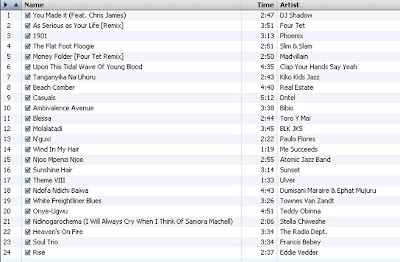
get it:
here
Tasting the light creeping through windows

get it:
here
Licking the memories creeping through light
Here's the second volume from the companion mixes:
Licking the memories creeping through light
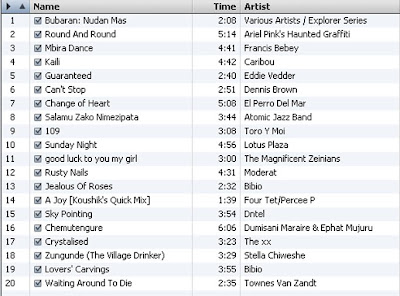
get it:
here
Licking the memories creeping through light

get it:
here
Bold commitment of sentiment
So I've been seriously lagging on posts. The new semester started, and my classes are spaced out in a wack way, so I have a bunch of short gaps between lessons instead of the usual larger chunks of free time. And everyone knows how that goes: if you have a long break where you're at work and still being paid you need at least half an hour or longer of vegetation time, and then you can start being productive...but if you only have 45 min. or an hour, by the time vegetation time is over, it's already class time and next to nothing has been accomplished.
In any case, so I'm upping three new mixes. Two of them are companion volumes, which can be ascertained by how their names relate to one another.
This first one is titled:
Bold commitment of sentiment
here
In any case, so I'm upping three new mixes. Two of them are companion volumes, which can be ascertained by how their names relate to one another.
This first one is titled:
Bold commitment of sentiment
here
Wednesday, March 3, 2010
1.26 microseconds went somewhere with Chile
Scientists are saying that the earthquake in Chile was so powerful that it slightly shifted the Earth's axis and shortened the length of each day by 1.26 microseconds. So it seems like whether we like it or not, everyone is losing a little bit of sleep over it.
Wednesday, February 24, 2010
combined operation and my second kid
When you climb to one of the peaks of Taebaek mountain you reach an area with trapezoidal stone-stacked altars where shamans still worship the sky and ring bell drums and chant and hold various animistic beliefs. When you look over the landscape you can see the military base and airstrip and sometimes hear the sounds from the bombs and weapons proving ground there. It really adds a level of interest to the landscape, as you scan it and realize it's punctuated by a mix of abandoned and still functioning coal mines, rivers, two thousand year old trees, a military base and weapons testing area, buddhist temples and shaman altars.
We ended up having some beers with a couple of US airforce dudes the other night who crashed our table at the bar along with a couple of Korean special forces soldiers. They were doing a "combined operation" for a few days at that military base. The quote of the evening must have been when one of the airforce guys was praising the great health care that the military provided him:
"Especially like...my fuckin' second kid...like I didn't have to pay shit for him!"
When he said that it really made me feel like there was something entirely different going on in his mind than there was in mine.
We ended up having some beers with a couple of US airforce dudes the other night who crashed our table at the bar along with a couple of Korean special forces soldiers. They were doing a "combined operation" for a few days at that military base. The quote of the evening must have been when one of the airforce guys was praising the great health care that the military provided him:
"Especially like...my fuckin' second kid...like I didn't have to pay shit for him!"
When he said that it really made me feel like there was something entirely different going on in his mind than there was in mine.
Friday, February 19, 2010
Place Is Collapsible
I'm working on a new project with Stefani that involves diptychs in the most random, regenerative, and expansive sense of the word:
Place Is Collapsible
C H E C K I T O U T
Here's some of my current favorite combinations:
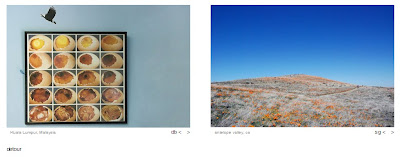


Place Is Collapsible
C H E C K I T O U T
Here's some of my current favorite combinations:


Tuesday, February 9, 2010
inna single instant
inna single instant mix:
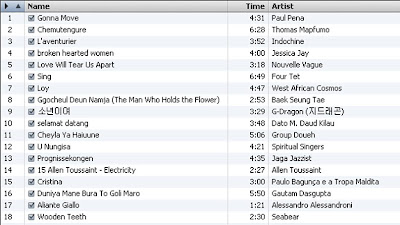
listen:
part 1
part 2
This one is a real treat, I think. It starts out with blind blues singer Paul Pena who won a throat singing contest in Tuva at one point in his life (check out one of my all time favorite documentaries Genghis Blues). Then there's some Malay pop and Thai pop and K-pop, French new wave, Korean disco, guitar music from the western Sahara, Congolese gospel funk, some New Orleans funky R&B, Bollywood steel guitar, a Joy Division cover in bossa nova style, some newer electronic cuts along the way, and of course a brief dose of blow-your-mind-apart Brazilian mellow earthy psychedelic rock, not to mention Thomas Mapfumo "The Lion of Zimbabwe", got him on there too.
Been really feeling the new Four Tet album. It really takes me back to some of his stuff with Fridge, kind of like a way more mature and refined working of some of those same ideas. Quite beautiful from start to finish.

listen:
part 1
part 2
This one is a real treat, I think. It starts out with blind blues singer Paul Pena who won a throat singing contest in Tuva at one point in his life (check out one of my all time favorite documentaries Genghis Blues). Then there's some Malay pop and Thai pop and K-pop, French new wave, Korean disco, guitar music from the western Sahara, Congolese gospel funk, some New Orleans funky R&B, Bollywood steel guitar, a Joy Division cover in bossa nova style, some newer electronic cuts along the way, and of course a brief dose of blow-your-mind-apart Brazilian mellow earthy psychedelic rock, not to mention Thomas Mapfumo "The Lion of Zimbabwe", got him on there too.
Been really feeling the new Four Tet album. It really takes me back to some of his stuff with Fridge, kind of like a way more mature and refined working of some of those same ideas. Quite beautiful from start to finish.
Thursday, February 4, 2010
Day eight to eleven
On Saturday we flew into Kota Kinabalu and it was raining. And it rained all day and night and the weather report said it could potentially rain for the next 10 days in a row. Out of the desire to insulate ourselves against steadily forming premature depression over the state of the weather, Lindsey and I purchased one bottle of spiced rum and a bottle of vanilla coke and retreated into the depths of our tropical bird themed hotel room with HBO and the colored light reflections bouncing around the window from passing by cars. It stopped raining the next day.
On Sunday we checked out the bustling street market on the same street as our hotel. It was filled with strange fruit usually piled in bright colored plastic baskets or cardboard boxes covered with wet spots soaking through. There was also the standard cheap souvenir shit, as well as live birds, fish and furry animals in cages and aquariums, kept in pitiful states of confinement and filth. There was one old man who was sitting in the street with some foot and a half long dead slimy lizard or salamander creature with an oversized tail laid out on a plate in front of him. It looked like a miniature version of some lost prehistoric creature, and there was an old yellowed scrap of a newspaper story held in place under the plate with a picture of the same creature. I couldn't tell what it was, but it seemed like he was selling the extract of that creature to ingest for health reasons of some sort. If it was Korea it would most definitely be sold for the purposes of male stamina in the sack, but I didn't know what was big in Borneo in terms of folk apothecaries. The highlight for me was this group of 3 guys rocking out with an old cheap casio synthesizer like I had when I was eight or nine. They had one of those simple cheeseball pre-programmed tropical rhythms playing and filled in the gaps with a guitar and some mishmash percussion instruments and one of the old guys was singing almost incomprehensibly into a scratchy mic. I could have listened to that music all day. When people don't focus on the deficiencies and limitations of their instruments and just let loose, it usually sounds better then anything made with large production budgets. We walked up Signal Hill and heard a massive beastly dog barking at us behind a fence on a narrow steep residential street. As we took a couple of steps closer we noticed that the dog was only behind the fence voluntarily, and started chasing us down the hill at full speed. I banked on the assumption that it was trained to just guard its territory and wouldn't attack so I told Lindsey not to run and just walk slowly away with me. It got pretty close to nipping at our heels, sensing our fear like a shark, but it refrained from attacking as it noticed that we were moving away the house it was guarding.
On Monday we went on a boat cruise down a river, on safari for those bignose proboscis monkeys found only in Borneo. We saw them. Only the males have big noses. Then Pat's plane landed later that night. Knowing his lighthearted yet severe distaste for "America's hat", I made a sign that said "Canada Forever!" and Lindsey made one that said "Canucks Rule!". We held it out next to all the Korean tour guides waiting to pick up their crop. The Zimbabwe sign I made in Bangkok worked better last summer I think.
On Tuesday we ate two breakfasts, which was excessive, but less excessive than the three dinners Lindsey and I ate in Kuala Lumpur. First breakfast: Chinese bbq pork steamed buns. Second breakfast: Chinese bbq pork noodles. In the afternoon we hired a private boat to take us to three islands off the coast and to check out the Filipino stilt village. The islands were idyllic. The beaches were idyllic. The ocean was idyllic. On the first beach I took a walk and found two Malay workmen standing watching a giant bearded boar tear apart a fallen coconut to eat.
On Sunday we checked out the bustling street market on the same street as our hotel. It was filled with strange fruit usually piled in bright colored plastic baskets or cardboard boxes covered with wet spots soaking through. There was also the standard cheap souvenir shit, as well as live birds, fish and furry animals in cages and aquariums, kept in pitiful states of confinement and filth. There was one old man who was sitting in the street with some foot and a half long dead slimy lizard or salamander creature with an oversized tail laid out on a plate in front of him. It looked like a miniature version of some lost prehistoric creature, and there was an old yellowed scrap of a newspaper story held in place under the plate with a picture of the same creature. I couldn't tell what it was, but it seemed like he was selling the extract of that creature to ingest for health reasons of some sort. If it was Korea it would most definitely be sold for the purposes of male stamina in the sack, but I didn't know what was big in Borneo in terms of folk apothecaries. The highlight for me was this group of 3 guys rocking out with an old cheap casio synthesizer like I had when I was eight or nine. They had one of those simple cheeseball pre-programmed tropical rhythms playing and filled in the gaps with a guitar and some mishmash percussion instruments and one of the old guys was singing almost incomprehensibly into a scratchy mic. I could have listened to that music all day. When people don't focus on the deficiencies and limitations of their instruments and just let loose, it usually sounds better then anything made with large production budgets. We walked up Signal Hill and heard a massive beastly dog barking at us behind a fence on a narrow steep residential street. As we took a couple of steps closer we noticed that the dog was only behind the fence voluntarily, and started chasing us down the hill at full speed. I banked on the assumption that it was trained to just guard its territory and wouldn't attack so I told Lindsey not to run and just walk slowly away with me. It got pretty close to nipping at our heels, sensing our fear like a shark, but it refrained from attacking as it noticed that we were moving away the house it was guarding.
On Monday we went on a boat cruise down a river, on safari for those bignose proboscis monkeys found only in Borneo. We saw them. Only the males have big noses. Then Pat's plane landed later that night. Knowing his lighthearted yet severe distaste for "America's hat", I made a sign that said "Canada Forever!" and Lindsey made one that said "Canucks Rule!". We held it out next to all the Korean tour guides waiting to pick up their crop. The Zimbabwe sign I made in Bangkok worked better last summer I think.
On Tuesday we ate two breakfasts, which was excessive, but less excessive than the three dinners Lindsey and I ate in Kuala Lumpur. First breakfast: Chinese bbq pork steamed buns. Second breakfast: Chinese bbq pork noodles. In the afternoon we hired a private boat to take us to three islands off the coast and to check out the Filipino stilt village. The islands were idyllic. The beaches were idyllic. The ocean was idyllic. On the first beach I took a walk and found two Malay workmen standing watching a giant bearded boar tear apart a fallen coconut to eat.
Subscribe to:
Posts (Atom)